

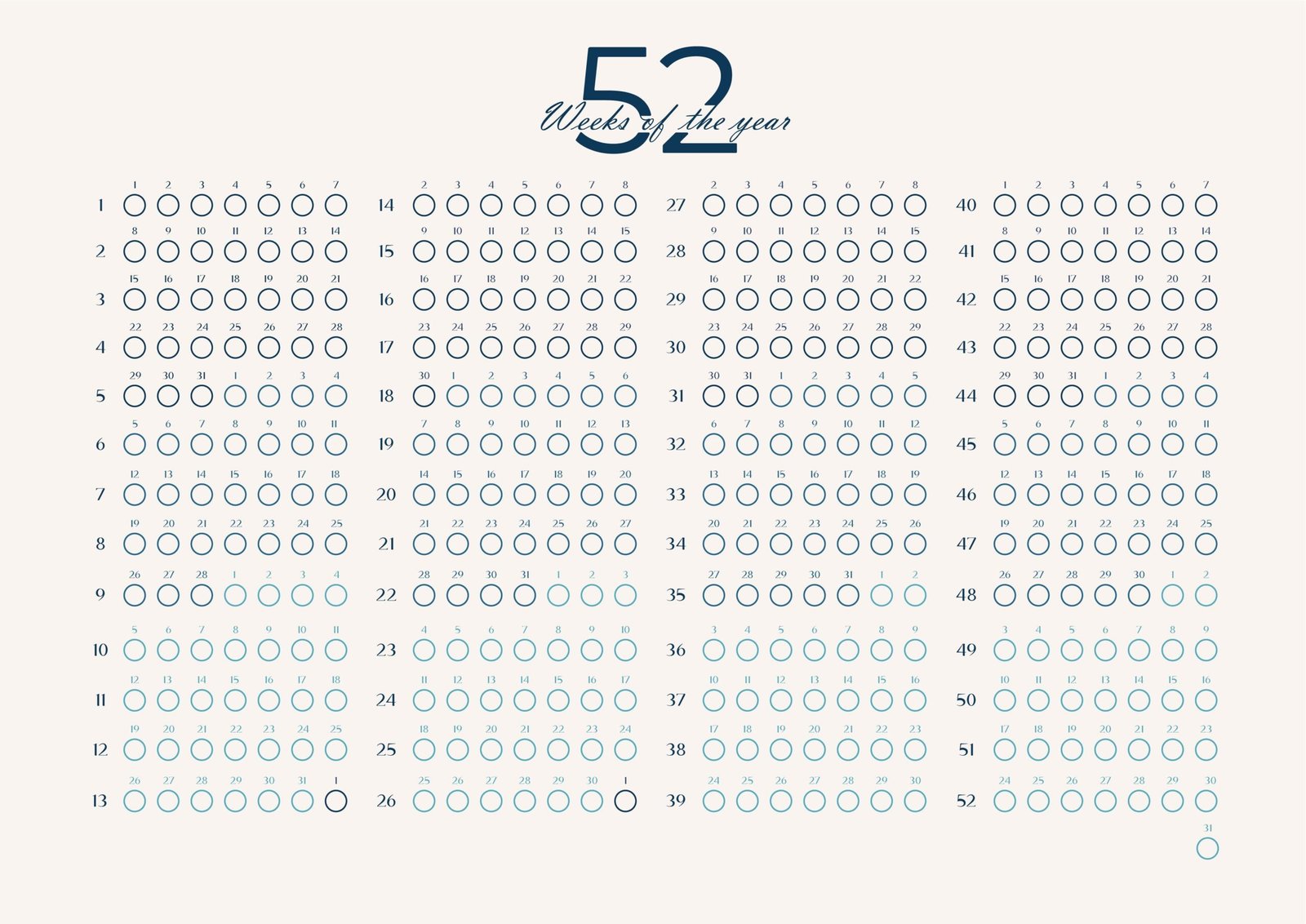
Have you ever wondered how many weeks are in a year? Whether you are planning your annual schedule, organizing work projects, tracking fitness goals, or helping your child with homework, knowing the number of weeks in a year can be useful.
A standard year has 52 weeks and 1 extra day, while a leap year has 52 weeks and 2 extra days. Although people commonly say that a year has 52 weeks, the exact calculation is slightly different because a calendar year does not contain exactly 364 days.
In this guide, we will explain how many weeks are in a year, how leap years affect the calculation, and how you can use this information for everyday planning.
How Many Weeks Are in a Year?
A regular calendar year contains 365 days. Since one week has seven days, dividing 365 by seven gives approximately 52.14 weeks.
Here is the calculation:
365 ÷ 7 = 52 weeks with 1 day remaining.
This means a standard year consists of 52 complete weeks and one additional day.
A leap year contains 366 days, so the calculation becomes:
366 ÷ 7 = 52 weeks with 2 days remaining.
Therefore, a leap year has 52 complete weeks and two extra days.
| Type of Year | Total Days | Complete Weeks | Extra Days |
| Regular year | 365 | 52 | 1 |
| Leap year | 366 | 52 | 2 |
The additional days explain why calendar dates shift from one year to the next and why leap years affect the calendar.
Why Does a Year Have 52 Weeks?
The reason a year has approximately 52 weeks comes down to the relationship between days, weeks, and the Earth’s orbit around the Sun.
A week consists of seven days, while a calendar year contains 365 days in a regular year. Dividing the total number of days by seven gives 52 complete weeks, with one day left over.
The extra day might seem insignificant, but it changes how dates fall on the calendar. For example, if January 1 falls on a Monday in a regular year, January 1 of the following year will fall on a Tuesday.
In a leap year, the two additional days shift the corresponding date forward by two weekdays.
This is why birthdays, holidays, and other annual events can fall on different days of the week each year.
How Many Weeks Are in a Leap Year?
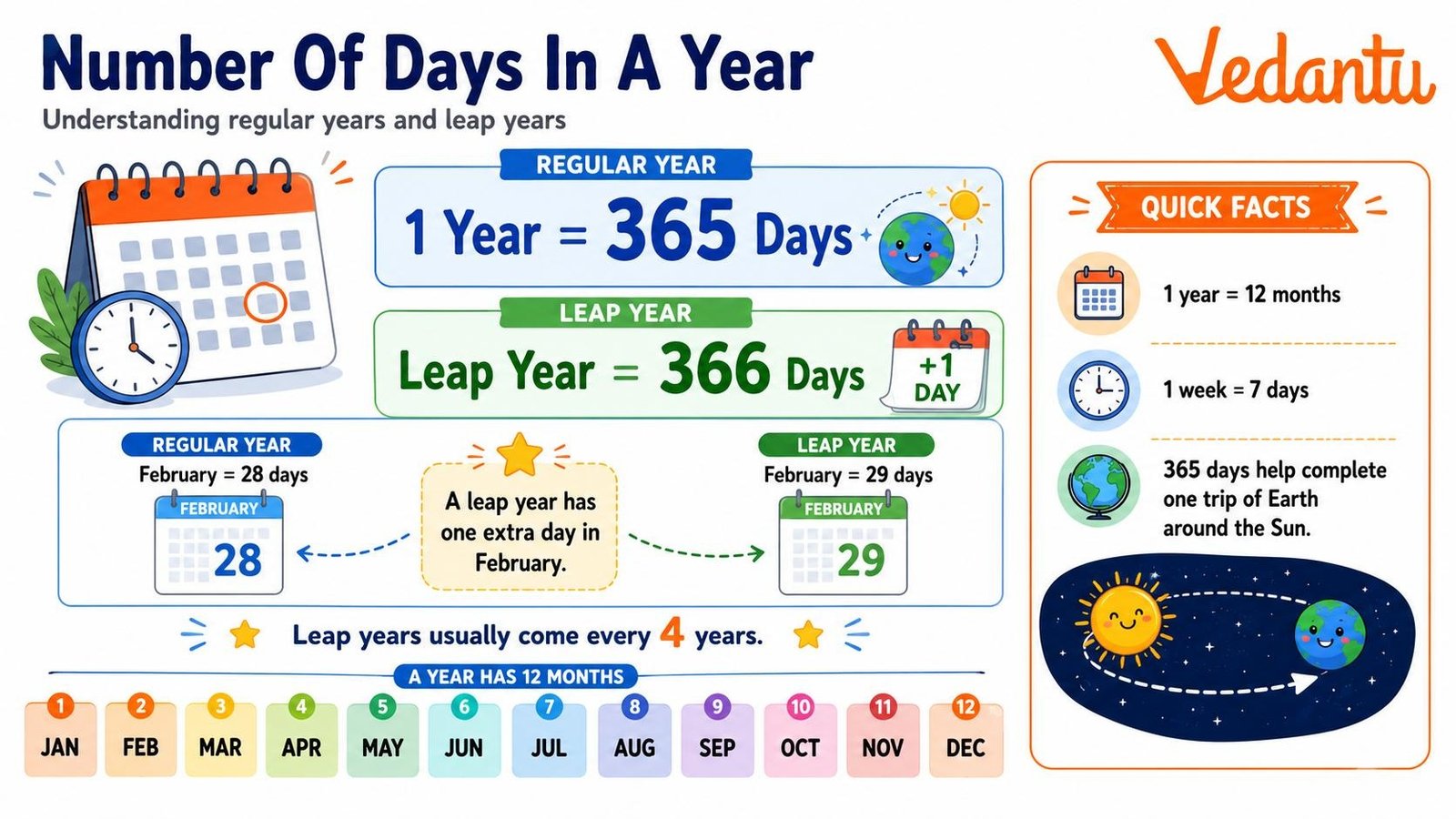
A leap year has 366 days, which is one day longer than a regular year.
Because seven days make a week, a leap year contains 52 full weeks and two additional days.
Leap years generally occur every four years to keep the calendar aligned with Earth’s orbit around the Sun. However, the Gregorian calendar has a few exceptions:
- A year divisible by 4 is generally a leap year.
- A year divisible by 100 is not a leap year unless it is also divisible by 400.
- A year divisible by 400 is a leap year.
For example, 2024 was a leap year, and 2028 will also be a leap year. The year 2100 will not be a leap year, even though it is divisible by four, because it is not divisible by 400.
These adjustments help keep the calendar synchronized with the seasons over long periods.
How Many Weeks Are in 2026?
The year 2026 is a regular year with 365 days.
Dividing 365 by seven gives 52 weeks and one extra day. Therefore, 2026 contains 52 complete weeks and one additional day.
This information can be useful when creating annual schedules, calculating work periods, planning school activities, or setting personal goals.
For example, someone who wants to exercise three times per week can use the 52-week estimate to create a yearly fitness plan. Multiplying three workouts by 52 weeks gives a target of 156 workouts over the year.
Actual totals may vary depending on the dates included in the plan and whether any weeks are incomplete.
Can a Year Have 53 Weeks?
Yes, a calendar year can contain 53 numbered weeks under certain calendar-week systems.
Although a year has only 52 complete seven-day periods plus one or two extra days, the way calendar weeks are numbered can result in a week-based calendar showing week 53.
The ISO week-date system, commonly used in business and international scheduling, follows specific rules:
- Weeks begin on Monday.
- Week 1 is the week containing the first Thursday of the calendar year.
- A week belongs to the year in which its Thursday falls.
Under this system, some years have 52 numbered weeks, while others have 53.
This does not mean that those years contain 53 complete seven-day periods within their January-to-December boundaries. Instead, the week numbering system allows weeks to begin in one calendar year and end in another.
This distinction is important when working with payroll schedules, accounting reports, inventory systems, and business calendars.
How Many Weeks Are in a Month?
The number of weeks in a month depends on how many days the month contains.
Most months have between 28 and 31 days. Since a week contains seven days, a month is approximately four to four and a half weeks long.
| Month Length | Number of Days | Equivalent in Weeks |
| February in a regular year | 28 | 4 weeks |
| February in a leap year | 29 | 4 weeks and 1 day |
| A 30-day month | 30 | 4 weeks and 2 days |
| A 31-day month | 31 | 4 weeks and 3 days |
It is common to estimate that a month has four weeks, but this is not exact for most months.
For example, multiplying four weeks by 12 months gives 48 weeks. However, a year contains 52 weeks and one or two additional days. The difference comes from the extra days in most months.
This is also why calculating monthly income, rent, or expenses using a four-week month can produce inaccurate annual estimates.
How Many Weeks Are in a Year for Work?
Knowing how many weeks are in a year can help employees, employers, freelancers, and business owners manage schedules and calculate annual earnings.
A regular year contains 52 weeks and one day, while a leap year contains 52 weeks and two days.
For someone working five days per week, a simple estimate is:
52 weeks × 5 working days = 260 scheduled weekdays.
However, 260 is only a starting estimate. The actual number of working days depends on the calendar, public holidays, vacation days, and the specific work schedule.
For example, an employee who earns $800 per week would receive $41,600 over 52 paid weeks, assuming the same weekly pay throughout the year and excluding bonuses or other adjustments.
Freelancers can use the same calculation to estimate yearly revenue, while businesses can plan staffing, production schedules, and project deadlines.

How Many Weeks Are in a Year for School?
Schools often organize their academic calendars around weeks rather than individual days.
The number of instructional weeks varies by country, state, school district, and educational institution. A school year is usually shorter than a full calendar year because it includes breaks, holidays, and time between academic terms.
For example, a school might schedule approximately 36 weeks of classes throughout the academic year. This is an illustration rather than a universal requirement.
Students can use weekly planning to divide large assignments into smaller tasks, prepare for exams, and manage extracurricular activities.
Teachers can also use weekly schedules to plan lessons, assessments, and classroom projects.
When planning school activities, always check the official academic calendar instead of assuming that all 52 weeks include classes.
How to Calculate Weeks Between Two Dates
Sometimes, you need to calculate the number of weeks between two dates rather than determine how many weeks are in a year.
The basic formula is:
Number of weeks = Total number of days ÷ 7
For example, if 28 days pass between two dates:
28 ÷ 7 = 4 weeks.
If 45 days pass between two dates:
45 ÷ 7 = 6 weeks and 3 days.
To calculate the number of days accurately, use a calendar or date calculator and decide whether the starting and ending dates should both be included. This matters when calculating deadlines, pregnancy timelines, project durations, or subscription periods.
For long periods that cross calendar years, account for leap years when counting the total days.

Why Is Understanding Weeks in a Year Important?
Understanding the number of weeks in a year can make everyday planning easier.
Here are several practical uses:
1. Personal goal setting
You can divide yearly goals into 52 weekly milestones. This approach makes large objectives easier to manage and review.
2. Budgeting and financial planning
Weekly income and expenses can be converted into annual estimates using 52 weeks as a baseline.
3. Fitness and health routines
A weekly workout schedule can help you measure consistency and set realistic annual targets.
4. Business management
Companies can organize employee schedules, marketing campaigns, inventory checks, and project timelines by week.
5. Education and studying
Students can break an academic plan into weekly study sessions instead of trying to complete everything at the last minute.
6. Travel planning
Counting weeks can help you plan holidays, accommodation, work leave, and long-term trips.
Although the number 52 is a convenient planning estimate, always calculate the exact dates when precision matters.
Frequently Asked Questions (FAQs)
1. Are there exactly 52 weeks in a year?
Not exactly. A regular year has 52 weeks and one extra day, while a leap year has 52 weeks and two extra days. People commonly round the total to 52 weeks for convenience.
2. How many weeks are in a year with 365 days?
A year with 365 days contains 52 complete weeks and one extra day. Dividing 365 by seven gives approximately 52.14 weeks.
3. How many weeks are in a leap year?
A leap year has 366 days, equal to 52 complete weeks and two extra days. In decimal form, that is approximately 52.29 weeks.
4. Does every year have 52 weeks?
Every regular or leap calendar year contains at least 52 complete seven-day periods. However, calendar systems such as ISO week numbering may assign 53 numbered weeks to certain years.
5. Can a calendar year have 53 weeks?
Yes. Under the ISO week-date system, some years have week numbers ranging from 1 to 53. This depends on how the days fall within the calendar, not on having 53 complete weeks contained entirely within the year.
6. How many weeks are in 12 months?
A 12-month calendar year contains approximately 52.14 weeks in a regular year or 52.29 weeks in a leap year. The exact number depends on whether the year has 365 or 366 days.
7. How many weeks are in 6 months?
Six months contain roughly 26 weeks, but the exact number depends on which months are included and the specific dates. Six calendar months do not always equal exactly 26 weeks.
8. How many weeks are in 2026?
The year 2026 has 365 days, which equals 52 weeks and one day. It is not a leap year.
9. Why do some calendars show week 53?
Some calendar systems number weeks according to specific rules. Under ISO week numbering, a year can have 53 numbered weeks depending on the weekday on which January 1 falls and whether the year is a leap year.
10. Is a month equal to four weeks?
No. Four weeks equal 28 days. Only a 28-day February in a regular year contains exactly four weeks; most other months contain additional days.
Conclusion
So, how many weeks are in a year? The simple answer is 52 weeks, but the precise answer is 52 weeks and one extra day in a regular year or 52 weeks and two extra days in a leap year.
Understanding this difference can help you plan your work, education, finances, fitness routines, and personal goals more accurately. Remember that some calendar systems also use 53 numbered weeks in certain years.
For everyday planning, 52 weeks is a useful estimate. When calculating exact deadlines, working days, or periods between dates, use the actual calendar dates for the most accurate result.

1 Comment
Pingback: How Many Ounces in a Gallon? A Complete Conversion Guide - Nerd Bot