


There is a notebook sitting in a drawer somewhere in your home, bought with good intentions and abandoned after three pages. If that sounds familiar, you are in good company — and it does not mean journaling “isn’t for you.” Learning how to start journaling is mostly about lowering the bar until the habit becomes almost effortless. No beautiful handwriting, no profound insights, and no hour-long sessions required.
This beginner’s guide covers what journaling actually is, why so many people swear by it, how to choose between paper and an app, and the simple formats and prompts that make your first weeks easy.

What Is Journaling, Exactly?
Journaling is simply the habit of writing down your thoughts, experiences, and reflections on a regular basis. It is not a diary in the “Dear Diary, today I had soup” sense — although it can include that too. A journal entry can be a list, a rant, a plan, a few lines about your day, or a page of questions you are turning over in your mind. There is no audience, no grading, and no wrong way to do it. The only rule is that it is for you.
Because it is private, journaling gives your thoughts somewhere to go besides circling in your head. Many people find that getting words onto a page makes worries feel smaller and decisions feel clearer, simply because the thoughts are finally visible in front of them.
Why People Journal: Everyday Benefits
People keep journals for many reasons, and the most commonly reported benefits are refreshingly down-to-earth:
- A clearer head. Writing down everything on your mind — tasks, worries, half-formed ideas — frees up mental space, like closing a dozen open browser tabs.
- Less day-to-day stress. Putting feelings into words can make them feel more manageable, and a regular writing pause gives a busy day one genuinely quiet moment.
- Better self-awareness. Patterns you would never notice in the moment become obvious on the page: what energises you, what drains you, and what keeps going wrong on Tuesdays.
- A record worth keeping. Months later, old entries show how much has changed — problems that once felt huge often read as surprisingly small.
If you would like a more structured overview, the University of Rochester Medical Center’s guide to journaling for emotional wellness explains how regular writing can support a calmer, more organised mindset, along with simple tips for getting started. Think of journaling as everyday self-care, in the same family as a walk or a good night’s sleep — a small habit that supports your general wellbeing.
Paper or App? Choosing Your Medium
The best medium is the one you will actually use, so choose based on your life, not on aesthetics.
Paper notebooks are distraction-free, never run out of battery, and many people find that writing by hand slows their thoughts down in a helpful way. Any notebook works — a cheap spiral pad is just as effective as a leather-bound journal.
Apps and digital notes are always with you, searchable, and easy to keep private with a passcode. If your phone is where your day is organised anyway, a notes app or dedicated journaling app removes the “my notebook is at home” problem entirely.
Still undecided? Try paper for two weeks. The physical ritual — opening the notebook, picking up the pen — helps many beginners turn writing into a cue-based habit.
Start Small: The Five-Minute Rule
The number one beginner mistake is aiming too big. Forget filling pages. When you start journaling, your only goal is to write one sentence a day — or, if you prefer a timer, five minutes with the pen moving. One honest sentence counts. Five imperfect minutes count. Small entries keep the streak alive on bad days, and on good days you will usually find that one sentence quietly turns into a paragraph anyway.
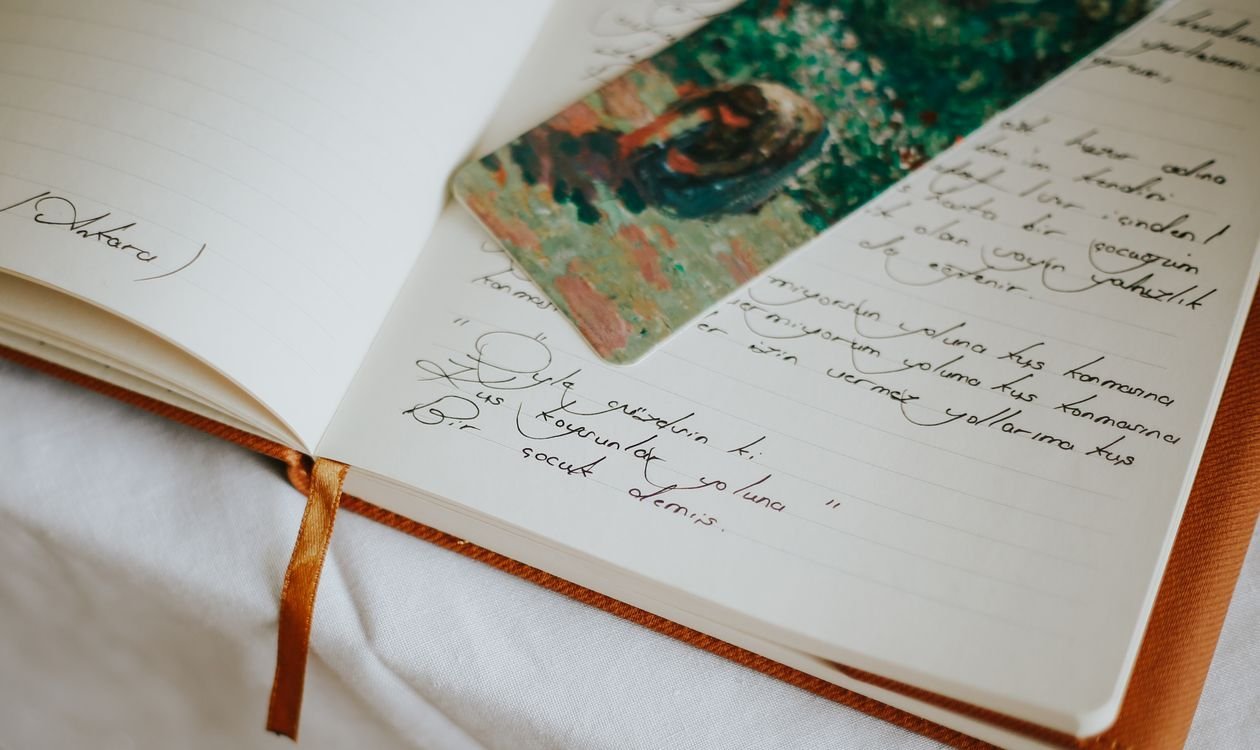
4 Simple Journaling Formats for Beginners
Staring at a blank page is the hardest part, so give yourself a format. These four are beginner favourites because they take the decision of “what do I write?” away entirely:
- The gratitude list. Write down three things you are grateful for today. They can be tiny — good coffee, a green light, a text from a friend. Specific beats grand.
- The emotion check-in. Name what you are feeling in one or two words, then write a few lines about why. Simply labelling an emotion often takes some of its charge away.
- Three good things. Each evening, note three things that went well and one short line about why each happened. This format gently trains your attention toward what is working.
- Free writing. Set a timer for five minutes and write whatever comes to mind without stopping, editing, or worrying about grammar. Nonsense is allowed; the point is the flow, not the prose.
Beginner Journal Prompts to Try
On days when even a format feels like too much, borrow a prompt. Pick one and write for a few minutes:
- What is taking up the most space in my head right now, and why?
- Describe today in three sentences, as if telling a friend.
- What is one small thing I am looking forward to this week?
- What drained my energy yesterday? What gave me energy?
- If I could give myself one piece of advice for tomorrow, what would it be?
- What is something I did recently that I am quietly proud of?
- What would a perfect, ordinary day look like for me?
How to Make Journaling a Habit
Motivation fades; routines stick. The most reliable trick is to anchor journaling to something you already do every day. Write while your morning coffee brews — if that is your ritual, our guide on how to make cold brew coffee can help you set up a smoother morning to pair it with. Keep the notebook somewhere visible rather than in a drawer: on the pillow, beside the kettle, or on top of your laptop.
Journaling also slots naturally into a wider self-care routine. Pair it with the small, consistent habits you are already building — the same steady, unhurried approach we recommend in our guide to azelaic acid serum for skincare. Two or three minutes of writing after your evening routine is a calm way to close the day.

Common Beginner Mistakes to Avoid
- Waiting for something interesting to happen. Ordinary days are the point. Write about the ordinary.
- Writing for an imaginary audience. The moment you start performing, honesty leaves the page. Nobody will read this but you.
- Setting a page quota. “A full page every day” is a fast route to quitting by Friday. Time or sentences, not pages.
- Giving up after a missed day. A gap is just a gap. The habit is defined by returning, not by an unbroken streak.
- Buying supplies instead of starting. The fancy notebook can be your reward at week four. Start with whatever is in the drawer.
Frequently Asked Questions
How often should I journal?
Daily is ideal for building the habit, but three or four times a week still delivers most of the benefits. Consistency matters more than frequency — a short entry you actually write beats a long one you keep postponing.
What if I miss a few days?
Nothing bad happens. Do not try to “catch up” by summarising the missed days unless you want to; just write today’s entry and carry on. Every long-term journaler has gaps in their notebook.
Is journaling on paper better than on my phone?
Neither is objectively better. Paper tends to be more focused and reflective; digital is more convenient and searchable. Choose the one that removes friction for you — you can always switch later.
Conclusion
Learning how to start journaling does not require talent, time, or a beautiful notebook — just a pen, five minutes, and permission to write badly. Pick one simple format, anchor it to a moment you already repeat every day, and let small entries do the work. A month from now, you will not just have a habit; you will have a record of your own thinking that quietly shows you how far you have come.
