

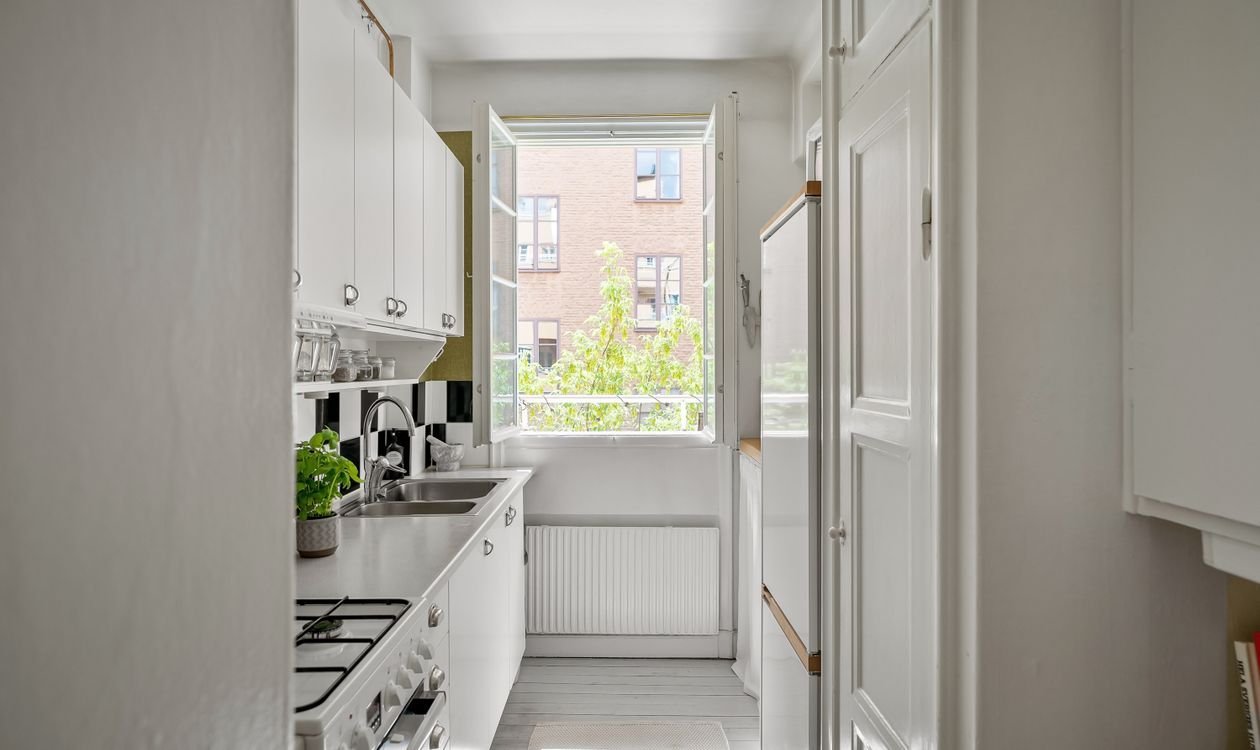
Every small kitchen has the same breaking point: the moment you cannot put a chopping board down because every surface is already occupied. The usual response is to buy storage products — but bins and baskets cannot fix a room that is simply holding too much. The small kitchen storage ideas in this guide start with what you own, then use the space most people overlook: walls, doors, corners, and the insides of cabinets.
Work through the steps in order. Each one builds on the last, and most of them cost little or nothing.
Step One: Declutter Before You Organise
Storage products organise clutter; they do not eliminate it. Before buying anything, take everything out of one cabinet at a time and be honest about what you find. The duplicate potato peelers, the single-purpose gadgets still in their packaging, the mugs nobody reaches for — most small kitchens are storing a surprising amount of things that are never used.
Keep only what you use regularly, plus a small number of seasonal items. Everything else can be donated, recycled, or moved to storage elsewhere in the home. This is exactly the same philosophy behind a capsule wardrobe — fewer, better-chosen items that all earn their space — and our capsule wardrobe essentials guide walks through that thinking if your closets need the same treatment. In the kitchen, decluttering first typically frees up more room than any organiser you could buy.
Go Vertical: Walls Are Storage Too
When floor and cabinet space run out, look up. Small kitchens usually have plenty of unused wall area, and vertical storage keeps everyday tools close without touching the counter.
- Shelf risers double the usable surface inside a cabinet by adding a middle level — ideal for stacking plates, bowls, and mugs that would otherwise become an unstable tower.
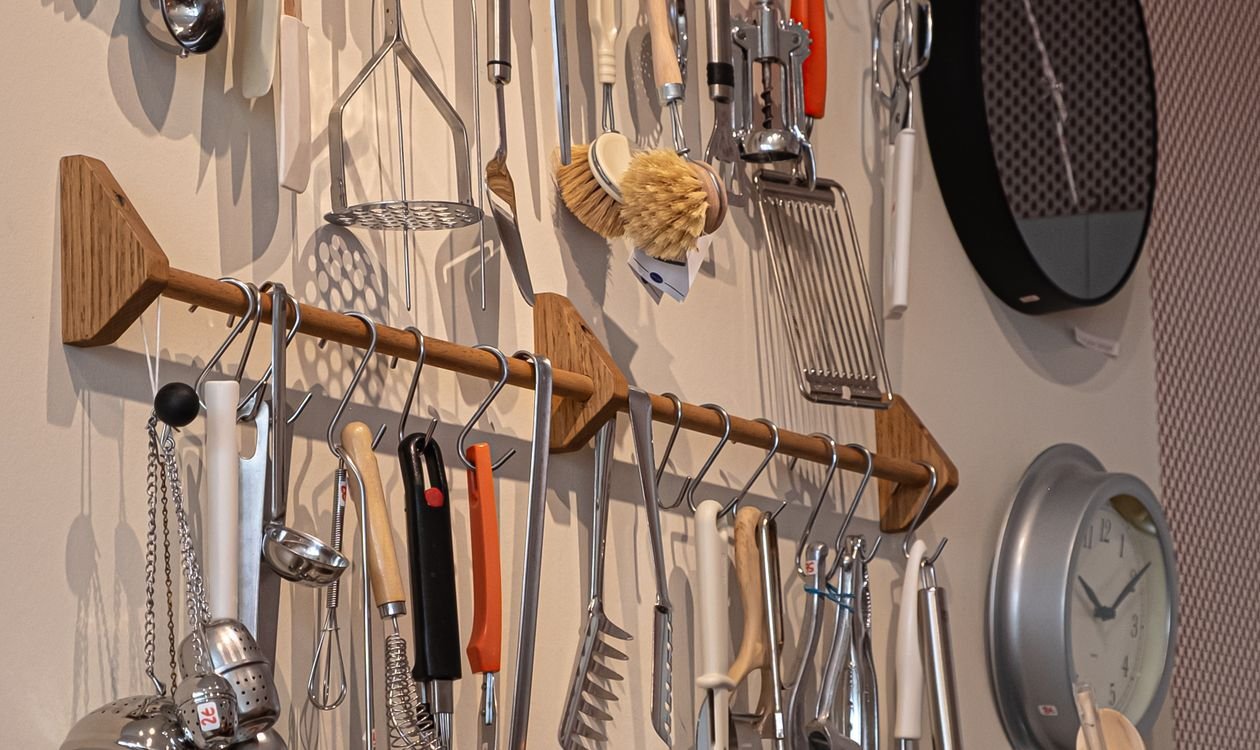
- Rails with hooks hold utensils, pans, and mugs along a backsplash or spare wall, turning dead space into your most accessible storage.
- Magnetic strips keep knives visible, reachable, and out of a bulky block — and they work for spice tins and metal utensils too.
- Floating shelves suit items you use daily, like glasses and everyday dishes, and make a small kitchen feel more open than closed cabinets do.
Make Cabinets Work Harder
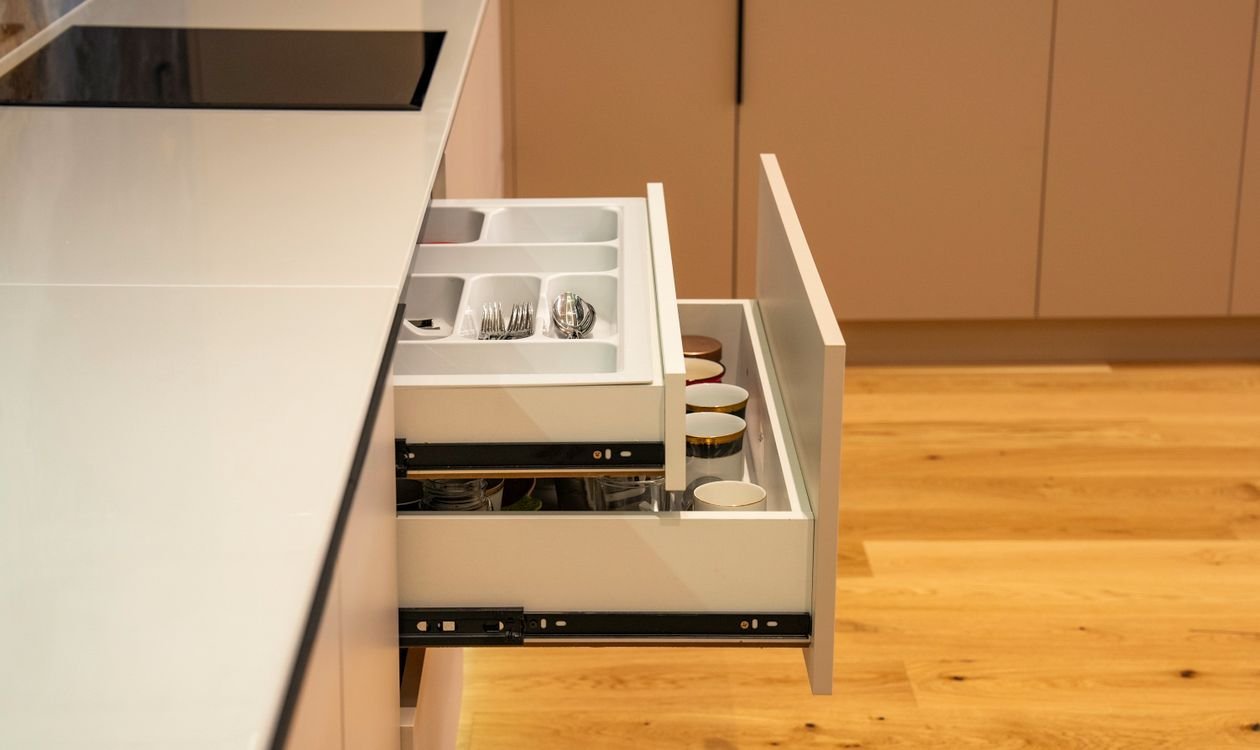
Most cabinets waste the top half of every shelf. A few inexpensive inserts fix that:
- Cabinet risers create two shorter levels that match what you actually store, so cans and jars stop hiding behind each other.
- Pull-out racks and baskets bring the back of deep cabinets to you — no more kneeling and excavating for the blender.
- Door-mounted racks use the inside of cabinet doors for cling film, foil, lids, or cleaning supplies. Measure the clearance first so the door still closes over your shelves.
- Stackable shelves and tiered spice steps keep small items visible in a single glance, which also stops you buying duplicates of spices you already own.
Corner Cabinets: The Lazy Susan Fix
Corner cabinets are where small kitchen items go to be forgotten. A lazy Susan — a simple rotating tray — is the classic solution because it brings everything at the back within reach with one spin. Use one for oils, sauces, and spice jars in a base corner, or a tiered version in an upper corner cabinet. If a lazy Susan does not fit your cabinet, a wide, shallow bin you can pull out like a drawer achieves much the same thing: the whole category comes out together instead of item by item.
Clear Containers and the Power of Seeing Everything
Decanting dry goods — pasta, rice, flour, lentils, cereal — into clear, uniform containers does three jobs at once. You can see what you have and how much is left, the containers stack neatly without the wasted gaps of mismatched packaging, and your shelves simply look calmer. Choose one container family with straight sides so they sit flush together, and add a simple label with the contents and the date you opened it. If you would rather browse more inspiration first, Apartment Therapy’s kitchen organisation ideas show how real homes use jars, risers, and open shelves to the same effect.
Counter Discipline: Daily-Use Items Only
Counters are workspace, not storage. A useful rule: only items you use every single day earn a place on the counter. For most people that is the kettle, perhaps a knife strip, and one appliance at most. The blender you use twice a month belongs in a cabinet, even if it looks nice.
A small, defined coffee station is the exception that proves the rule — grouping the machine, mugs, and beans in one tray keeps the ritual tidy without spreading across the room. If you are setting one up, our step-by-step guide on how to make cold brew coffee is a good place to start. Everything else gets a home behind a door, and the room instantly feels twice the size.
Don’t Forget the Space Under the Sink
The under-sink cabinet is awkward — pipes eat the middle, and the rest becomes a graveyard for half-empty spray bottles. A small tension rod stretched across the top lets you hang spray bottles by their triggers, freeing the floor of the cabinet for a caddy or stacking bin with sponges, cloths, and bin bags. Group cleaning supplies in one portable container and you can carry the whole kit wherever you are cleaning.
Renter-Friendly, No-Drill Options
Renting does not mean living with chaos. Plenty of effective storage asks nothing of your walls:
- Over-the-door racks and hooks for towels, aprons, and lightweight pantry items.
- Adhesive hooks and magnetic strips rated for the weight you need — magnets work on the side of the fridge too.
- Tension rods inside cabinets and under sinks, which hold dividers and hanging bottles with no fixings at all.
- Freestanding shelf units and rolling carts that add a whole extra storage column and leave with you when you move.
Small Kitchen Storage on a Small Budget
Almost everything in this guide can be done cheaply if you sequence it well. Decluttering is free and comes first. Risers, hooks, and a lazy Susan are among the least expensive organising products available, and charity shops and second-hand marketplaces are full of baskets, jars, and tins. Spend on the one or two items you will touch daily — a sturdy rail or a good pull-out rack — and improvise the rest. Measuring every cabinet before you buy anything is the single best way to avoid wasting money on organisers that do not fit.
Frequently Asked Questions
Where do I start in a really chaotic kitchen?
Start with one cabinet and a bin bag, not the whole room. Declutter a single space, finish it completely, then move on. Small completed zones are motivating; a whole kitchen emptied onto the floor is not.
How do I store things with no pantry at all?
Spread the pantry across the kitchen: dry goods in clear containers in one cabinet, tins on a riser in another, and a rolling cart or over-door rack for overflow. Keeping categories together — even across different cabinets — works nearly as well as a single pantry.
Are open shelves practical in a small kitchen?
Yes, for items you use daily, because constant use stops dust building up. Reserve open shelves for everyday dishes and glasses, and keep rarely used or less attractive items behind cabinet doors.
Conclusion
The best small kitchen storage ideas are not really about storage products at all. Declutter first, use the walls and doors everyone ignores, give corners a way to rotate or pull out, and defend your counters for cooking. Do those four things and even the smallest kitchen starts to feel calm, quick, and genuinely pleasant to cook in.

2 Comments
Pingback: How to Meal Prep for Beginners: A Simple Weekly Plan - Nerd Bot
Pingback: Indoor Plants for Beginners: 7 Easy Plants That Are Hard to Kill - Nerd Bot